A wedding hall in Tehran, sometime in the late 1990s. The lights flare and settle to reveal a single performer behind a Yamaha keyboard, wiping sweat from his brow, filling the room with preset rhythms while the crowd mills, eats, dances, and shouts requests. Thousands of such setups powered celebrations across Iran in the ’90s and early 2000s — a hard drive’s worth of riffs, stock rhythms, melodrama, and accidental virtuosity, all in search of a life beyond the night they were played.
A1000 is Googoosh Dolls’ attempt to step back into that room, to bring the mehmooni to a basement show. Built almost entirely from the Yamaha PSR-A1000, an early-2000s keyboard loaded with SWANA virtual instruments, the album imagines itself as a two-person performance replayed in isolation. Six tracks of tightly constrained excess, equal parts utility and indulgence, precision and melodrama, brought to you by the Andy & Kouros of Brooklyn.
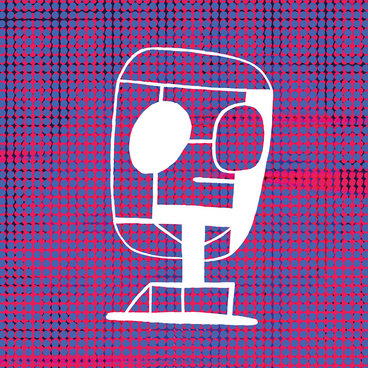
Lineage-wise, Googoosh Dolls live in a productive split. On one side are minimal techno, grid-based composition, and process music—systems, rules, counting, MIDI routing, and deliberate constraint. On the other are SWANA pop and dance traditions, especially the keyboard-driven aesthetics of lo-fi community gatherings, TV music, and late-20th-century commercial pop. The music borrows freely from both worlds without fully belonging to either. Tracks are built through math, programming, and grid logic, then intentionally contaminated—made rigid and sparse, flooded with something gaudy or melodramatic, and stripped back again. Farah Al Qasimi’s artwork, depicting two Babas at a desk immersed in calculation amid dense textures and color, renders that same tension between scaffold and ornament.
A1000 is, above all, a work of excavation turned sidereal transfiguration. The mechanism is simple, and in the abundance of this simple yet demanding work lies the supreme gesture of electronics. The record follows an extremely compelling logic: take something given, a fixed machine and its finite vocabulary; build something completely different; exponentially multiply the possible outcomes through the narrowest of means. What emerges are fragments of material that remain recognizable even after being shattered, recomposed, and recycled. The result is music suspended outside ordinary chronology. Its new life is no longer tied to its original coordinates, nor to any other coordinates at all.


Please refine your search and try again using the search form above.



*The gift cards or vouchers can only be used at www.phonicarecords.com, on any goods except Technics decks, additional gift vouchers or tickets. We reserve the right to add further exemptions on particular items in the future.


51 Poland Street
London W1F 7LZ
Email: customerservice@phonicarecords.com
Registered in England and Wales under no. 04625246.