Communication is about the way images determine our view of the world and how electronic media is going to change the content of our society" said legendary ex-Kraftwerk member Karl Bartos of his debut solo album when it was released back in 2003. It was a pivotal moment in technological times and by extension cultural ones, the world of digital was no longer a on-the-horizon vision only brought to realisation by pioneers and visionaries - such as Bartos - but it was instead almost here, around the corner and facing everyone square in the face. Communication was an attempt to capture these changing, perhaps unknown, times and distil them through the voice of someone who most would feel comfortable being led into the future with. Thirteen years down the line, Bartos is re-releasing the album complete with a pristine re-mastering. Due to record label frugality, and perhaps being somewhat overshadowed by the coincidental return of his ex-band and their Tour de France Soundtrack album at the same time, Communication was unable to take the momentum and energy of the material on the album and process it into a spirited public campaign, leaving it to often be referred to as Bartos' 'Lost Album'.
The re-release, which will be the first time the album is available digitally, also comes with the previously un-included track 'Camera Obscura', which sounds like it could have been a lost track from Kraftwerk's Computer World era.
As you would expect from the man responsible for co-writing such Kraftwerk masterpieces and musical compositions - that have gone on to shape the current musical world as we know it, electronic or otherwise - as 'The Model', 'The Robots', 'Numbers' or 'Pocket Calculator' Communication contains plenty of melody-driven numbers that operate in a dual universe of pop and electronica or, perhaps most accurately, one in which both are one and the same. Narrated by the familiar sound of a vocoder, it's a record that feels propped up by the previous work of Bartos, his unmistakable tone and vision ever-present, but also one that intends to break free of that, a re-assessment of sorts. A record that embodies change in both a personal and wider context - the lead single 'Life' perhaps being the most perfect representation of this: "finally, I have to get on with my life" he sings. Lyrically it speaks volumes but sonically it almost seems to pay a return thank you to New Order in its breezy, harmonious yet infectious structure. New Order being a group clearly in admiration of Bartos' work in and out of Kraftwerk and also in which the pair (Bartos and Bernard Sumner) would work together under the guise of Electronic, along with Johnny Marr in 1996. Bartos originally produced Communication between August 2002 and January 2003, together with engineer Mathias Black in his Hamburg studio. The concept however, he had already. Bartos noticed, around the turn of the century, the all-encompassing influence of digital media on society and his response was laying the groundwork in his mind for what would become Communication. Inspired by Andy Warhol's statement "In the future, everyone will be world famous for 15 Minutes" Bartos comments on the track '15 Minutes of Fame' on the growing celebrity culture of the time, triggered by casting shows, container formats, cookery programs etc. A period in which anyone could be famous for anything: singing, dancing, cooking, losing weight or holing up in a jungle to 'survive'.
The album still retains a sense of punch and relevance, whilst so much technology and culture from that period feels hideously antiquated now, Communication still has both a voice and a sonic charge to it that seems to nod to the Kraftwerk foundations he helped shape, the burgeoning dance scene of the period in which it was originally released and, most crucially and characteristically, with a view to the unknown future. Despite being responsible for some of the coolest music to have quite literally ever been created, Bartos' ethos for this record has remained unchanged in the thirteen years, he says, "It is not the job of music to be fashionable. The meaning of music is bringing people together "
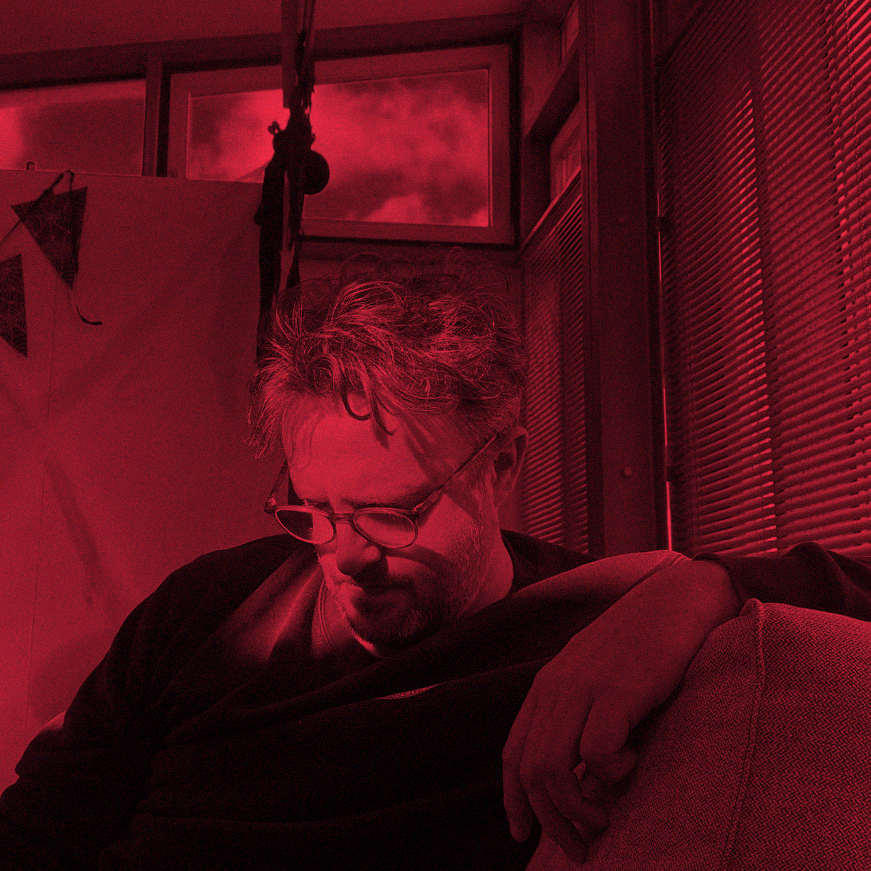
A classically trained percussionist and keyboard player, Bartos was a key member of Kraftwerk's classic line-up between 1975 and 1990 - "the second from the left". After having left the band, Bartos' activities as an author and producer lead to globally successful collaborations with Electronic (Bernard Sumner / Johnny Marr), OMD (Andy McCluskey) and Anthony Rother (Germany), as well as making records for his own project entitled: Electric Music. He has been a long time proponent of multimedia formats, experimenting with film and music from a very early period and continues to do so today. In 2004 he co-founded the master program "Sound Studies - Acoustic Communication" at the Berlin University of the Arts where he was a visiting professor teaching Auditory Media Design until 2009. In 2006, he completed the soundtrack to the film Moebius Redux - A Life in Pictures - presenting the renowned French comic illustrator Jean "Moebius" Giraud. In March 2013 Bartos released his last and critically acclaimed album Off The Record. Having spent numerous decades as a truly inimitable cross-platform visionary, Bartos is also writing his autobiography, which will be published - and expected with some anticipation - later this year or early in 2017.


Please refine your search and try again using the search form above.



*The gift cards or vouchers can only be used at www.phonicarecords.com, on any goods except Technics decks, additional gift vouchers or tickets. We reserve the right to add further exemptions on particular items in the future.


51 Poland Street
London W1F 7LZ
Email: customerservice@phonicarecords.com
Registered in England and Wales under no. 04625246.