





12th June 2015

Original Source: They Vinyl Factory
Photographer Alex Bartsch has spent the last few years tracking down the locations behind some of reggae’s most iconic sleeves.
A portrait of the music and its adopted home in the British capital, his project captures the context around each record in more ways than one, offering a new and refreshing perspective on the relationship between the city and its musical heritage. With a book on the way, we spoke to Alex Bartsch to illuminate the work and share some of his favourite images.
How did you get into record collecting and what are you particularly into?
I started getting into music in school in France, passing around mixtapes between friends. Hip Hop and reggae have always been quite popular in France. I used to listen to a lot of hip hop and got into reggae later.
I started collecting records about 10 years ago when I moved to London. I was buying all sorts of music until I realised I was spending a lot of money and couldn’t afford to buy everything so I stuck to Jamaican music, anything from ska to dancehall.
What inspired you to start this project?
I managed to get hold of Joe Mansano’s Brixton Cat on Trojan from Selectors record shop up the road. I love the cover of the record! It features his sister in law at the time standing on the corner of Electric Avenue and Atlantic road. I took it down the market one day and held the album up and photographed it there. That was the first cover I did. After that I dug out Smiley Culture’ ‘Cockney Translation’ 12” and cycled down to Plough Road in Battersea to shoot it. John from Dub Vendor had given me the location. And it when on from there…
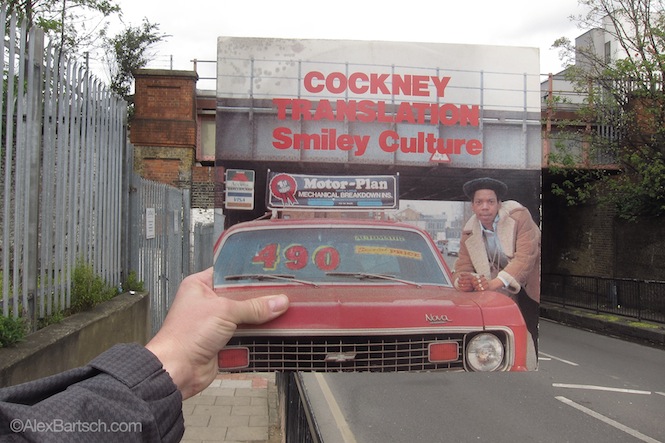
The research part of it was quite fun. I’d spend days trying to find out the location of the covers. I knew they were in London, my mission was to find out where. Some were evident, some pretty obscure. Those ones were the interesting ones to work on. It’s like detective work and finally discovering the location was a good feeling.
What is it about the images on these sleeves that interested you as photographer rather than record collector?
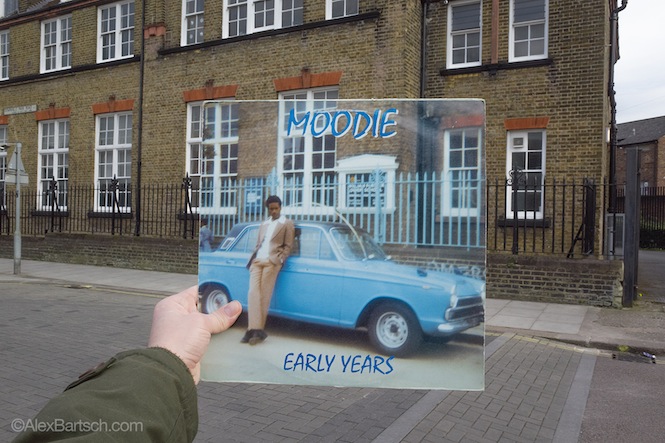
I like the fact that they are simple. Often featuring the artist or a relative of theirs. From doing my research on the locations, I found that a few of them were taken just outside or close by to the recording studio or the record label’s offices. Delroy Wilson’s Go Away Dream was shot just outside Starlight Records in Harlesden. Nothing seemed to have been majorly planned when it came to shoot the cover. I like that.
It’s interesting how many use either landmarks or stereotypically English settings. Why do you think that is?
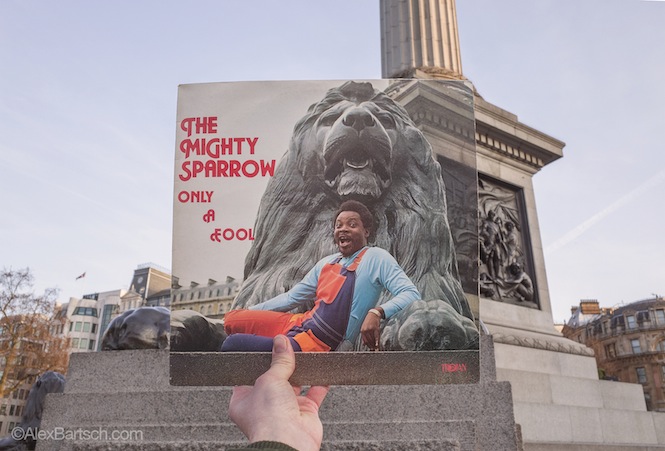
I’m not sure. I guess coming from Jamaica some artists were drawn to London landmarks in the same way other visitors are.
What effect does putting them back within their original settings decades after they were taken do for our understanding of both the record sleeve and the place they were photographed?
I think the image on a classic record cover and its identity usually remains within it borders, it’s instantly recognisable as a cover but not so much as a place that really exists, so by photographing it in a wider angle and revealing more of the space in its present day brings me and the people viewing it closer to the place and time when the artist sat for the shoot.
Could you tell us a bit about what’s planned for the book?
The plan is to get the project made into a book and launch it alongside an exhibition by the end of the year. I’m happy to be working with Al Newman from OneLoveBooks who will publish it. We should hopefully come up with dates for this soon.
6th June 2015
Garage godfather Todd Edwards throws down a hypnotic patchwork of vocal samples and swinging house cuts.
Our RSD party was without doubt a Record Store Day highlight. Kept secret until the very last minute, the all-star lineup saw Jacques Greene kick off proceedings, followed by Detroit wizard DJ Dez Andrés and garage pioneer Todd Edwards, before Four Tet sent the dancefloor into overdrive with an ever eclectic selection.
We Teamed up with FACT TV and The Vinyl Factory live streamed the action. You can now watch the Todd Edwards set in the video above. And head here to download the mix on soundcloud.
2nd June 2015

June has arrived and so has the next episode of the Phonica Mix series. Joining forces behind the decks this month are two London artists simply known as ‘The White Man & The Arab’ aka BLM (Fear of Flying / Underground Quality) & Soho (Phonica Records / Like That). For the past two years they’ve been labouring away in a west London studio to create coveted slices of analogue machine music which they solely put out through their own limited imprint. Both artists are experienced and versatile DJ's who are just as comfortable playing Fabric's room 1 as they are dropping dub cuts at an open air day time party. The mix they prepared for us today is a no nonsense selection of rolling house and techno that's blended together with expertise.
To help you get to know this great production duo a little better, we took the liberty to ask them a few questions. Find them down below. Enjoy!
Mix Series 13 - The White Man & The Arab by Phonica Records on Mixcloud
Tell us about the mix, your selection and how you work together behind the decks?
Mix is totally recorded off the cuff. We tried it a few times but after listening back to the recordings we didn't feel that it was a proper representation of our respective sounds and mixing styles. Basically we trashed a few mixes. Finally we decided to play how we would if we were playing an earlyish set out at a party. Selection was more of the deep, rolling house & techno, both of us mixing one track each, no frills, all on vinyl. We don't really have a specific style behind the decks, we have a sort of understanding of what we both like which usually meets in the middle. We can play pretty much any style depending on place and time.
Although we know you both on a professional level, we don't know too much about your relationship or how 'The White Man & The Arab' came to be. Can you tell us about how you both linked up?
We have been friends for over 10 years. We first met back in 2002 up in Nottingham. A friend of ours was playing up there at the time and we were both there in support. We had mutual friends and we both knew of one another because we used to be on this message board called 'The Techhouse board'. Every time Ben was down in London for a night at fabric we would link up. Then when he finally moved to London around 2007 we would hang out more often as we both live in west London, eventually we started working on music together which developed into this project.
Besides the fact that Soho's the Arab and Ben's blatantly the white man, What's the concept behind the label?
The artist name we chose was tongue and cheek. We'd both already released music but the stuff that we were making together sounded different to previous works, so deciding to use a new alias for our project rather than what he had already been using to put music out. We didn't want it to be something overtly serious, and we thought it would be fun to come up with a name that would represent our backgrounds. Both the label and artist name is the same as we thought it made sense because we were only ever going to put out stuff that we were making.
Each release on your imprint has a strong analogue sound, can you tell us about you studio set up?
Everything is made using analogue machines with a helping of lots of greens.
001 and 002 were made at Ben's house in 2011/12. The setup starts with the jomox xbase 888. This is the core machine that makes the wma sound in our opinion. We also used the ensoniq esq1 and the dave smith prophet 08 wired up to a bunch of delay pedals and the eventide space reverb machine. All of this was sequenced in ableton by sequencers made in max4live.
003 was made in 2014 by which time Ben had moved all his gear into a studio space not far from mine and his home. Sharing the studio with another producer who had a bunch of gear from the 90’s so we had access to a nice analogue desk to run all the synths through and some oddball processing units which really helped tighten things up.
We know you're big diggers and you reach far beyond the House and Techno section. What influences The White Man & The Arab's sound?
We both have a strong passion for dub & reggae music, so that definitely connects us to some degree. We have a mutual respect for the soundsystem culture that came out of Jamaica. Both of us love hip hop and we are both children of the beat. Obviously we have somewhat similar tastes with house & techno, we guess these things all influence our sound to an extent. Mainly we trust our own ears, we don't tend to follow or try and recreate a specific style that would influence our sound. We just make what we know how to make.
You've both been behind the decks and on London's dancefloor's for awhile now, What do you think about the city's scene today?
We think its still strong. There are tons of great lineups each weekend that cater to all different tastes. We perhaps dance a little less these days but we are still having fun listening to great music so it’s all good.
What's on the horizon for you guys?
Free Palestine.
29th May 2015

Original Source: The Vinyl Factory
Jazz pianist and artist Jason Moran has lived in Harlem for twenty two years.
While he has seen the area change dramatically in that time, to understand where modern Harlem is today you have to go back to the beginning of the 20th century. The adopted spiritual and cultural home of the black American community who made the blocks between 96th (or 110th depending if you’re east or west of 5th Avenue) and 155th street in Manhattan their own, the outpouring of concentrated creativity in the 1920s turned Harlem into a mecca for African American artists, writers and musicians.
As James Baldwin and Langston Hughes were writing new histories for the community to be read by day, the era’s greatest jazz musicians made the night their own. Whether at the Cotton Club, the Savoy Ballroom or the Apollo, Louis Armstrong, Duke Ellington and the great band leaders of the swing era made sure no-one left Harlem without a spring in their step. As their reputation grew increasing numbers of well-healed midtown New Yorkers took Duke’s advice and jumped on the proverbial A-train for a piece of the action.
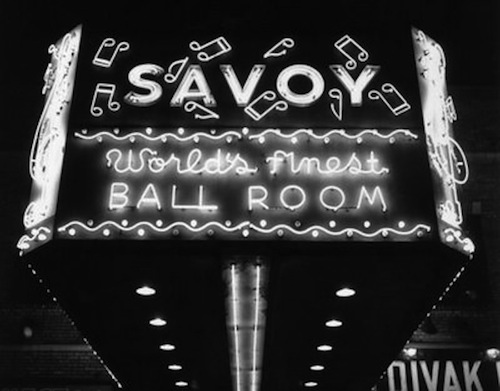
Grand spaces – the Savoy had two stages and a capacious dance floor – the clubs of the Harlem Renaissance were built for dancing, the jazz musicians consummate entertainers who expanded on the rag time and Dixieland traditions of New Orleans to make greater space within the music for solos and self-expression. The stages were brassy and the music reverberated above the breathless crowds.
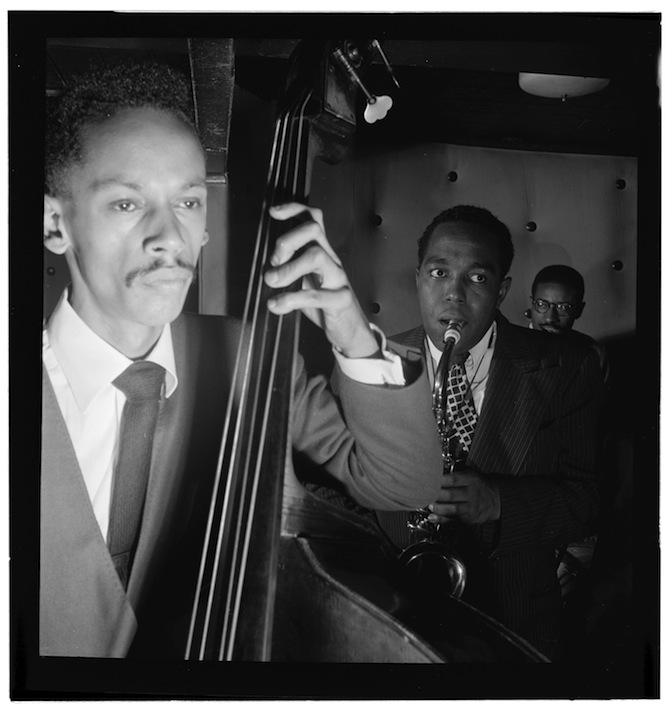
However for the young musicians making their names under the likes of Cab Calloway and Count Basie, the big band solo still represented something of a restriction and the years that followed saw the complexity of the music increase in tandem with shrinking band sizes. Charlie Parker may have cut his teeth in the big bands of the mid-west but along side Dizzie Gillespie, Thelonious Monk, he was among the first to ask, in Jason Moran’s words… “What if I make these phrases move totally differently? You won’t be so easily able to swing to this song, you’ll have to concentrate a bit more. And what if the rest of the band does that as well?”
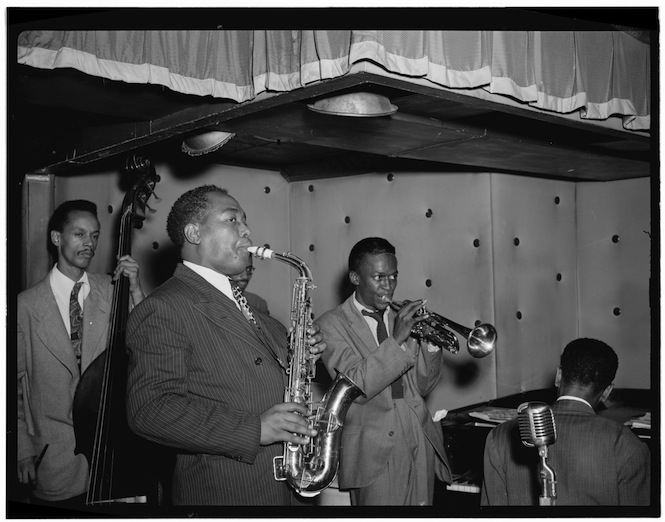
Charlie Parker, Miles Davis and band at the Three Deuces – Photo: William Gottlieb
So be-bop was born, and with it a new breed of jazz club that needed to satisfy the evolving requirements of musician and audience. Structurally complex, fiercely virtuosic and at times wilfully difficult, to get the most out of be-bop you needed space for your head more than your feet. Jazz clubs and their stages became smaller, the acoustics dampened for clarity, and the large dance floors were replaced by tables and chairs. Politically speaking, it represented a moment of greater empowerment for the musician, and elevated jazz from entertainment to art form overnight.
It was perhaps no coincidence then that the clubs that made be-bop great began pulling jazz further and further south of 125th Street. Founded on 118th Street in 1938, Minton’s Playhouse hosted legendary jam sessions throughout the forties, where Bird, Diz and Monk honed their sound. Three years earlier, the Village Vanguard opened its doors in the Greenwich Village, quickly followed by the Half Note, the Village Gate and the Five Spot, as the downtown scene flourished. The bright lights of mid town were next and it wasn’t long until jazz found a new home nestled among the art galleries of 52nd and 53rd streets. By the time Art Blakey and The Jazz Messengers recorded A Night At Birdland in 1954, be-bop had taken over the city.

Photo: William Gottlieb
Among those mid-town joints was the Three Deuces. Although he managed to find people who’d been to the see Bird, Miles Davis & the rest on its padded stage, Jason Moran wasn’t able to find anyone who’d romped and stomped at the Savoy. Fascinated by the way in which the spaces not only helped form and respond to the needs of the music, but also by what these said about the black American experience in what was still a visibly divided and unequal city, he set about trying to recreate two of the most emblematic stages from these contrasting moments in jazz; the swing-era Savoy Ballroom and the be-bop-era Three Deuces.
Entitled STAGED, Moran has displayed these spaces at the Venice Biennale where they will remain until November. With a number of acclaimed releases for Blue Note under his belt, Moran has also cut three new tracks to vinyl to accompany the installation, drawing a line through the jazz continuum from its earliest manifestation in blues and work songs all the way through to hip hop and sample culture.
Speaking eloquently about the way in which New York’s jazz clubs have helped define the music and the communities in which they’re rooted, Jason Moran gave us a few moments of his time to tell us a little bit more about the project and why, in an increasingly gentrifying Harlem, it’s as important as ever to consider what happened to the spaces that made it great.
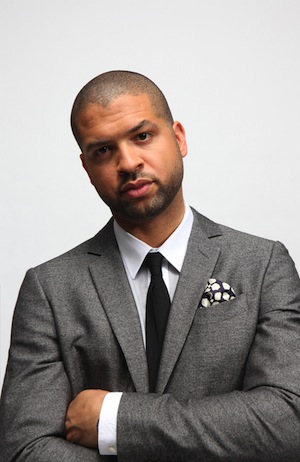
Could you begin by introducing your project STAGED and what it was that interested you in these spaces?
I have these two stages, we’ve called them STAGED and they are a look at how architecture impacted the sound of jazz and the possibilities of jazz and also to examine America’s tendency to totally demolish historic sites, specifically jazz historic sites. This is an effort to raise them back up.
Generally when I’m doing that as a pianist I’m doing it from a point of view of playing the music – I’ll raise the music, but this time I’ve decided to raise the structure that was the context for the music.
So one is called the Three Deuces, which was a very famous club in the ‘40s and ‘50s on 52nd Street in NYC, which at that time was like a jazz mecca. Everybody played there. Charlie Parker, Miles Davis, Max Roach, Charles Mingus, you know, every great musician of the be-bop era was on this stage.
I’m looking at the proximity, small bands in this space, big bands in the Savoy Ballroom, and looking at the scale for the music.
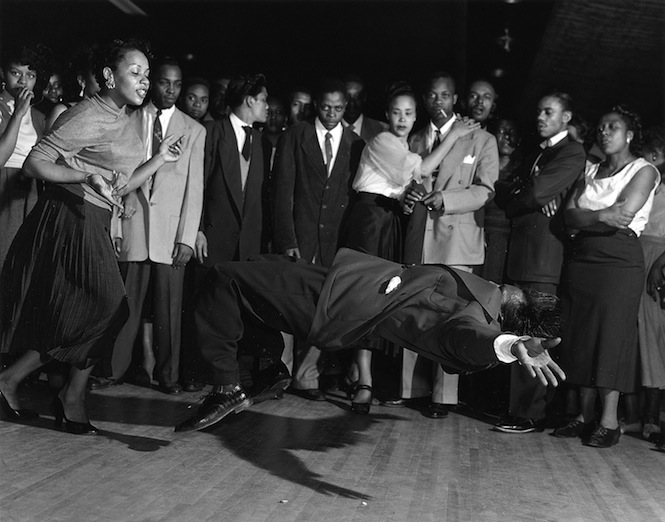
Inside the Savoy Ballroom – Photo: Associated Press
So at the Savoy, musicians were entertainers and the audience were the dancers, whereas at the Three Deuces, it was more about sitting and listening to musicians as artists.
There’s a different trend that started to happen with relationship to these two clubs which also points to how the music’s relationship to its audience shifted dramatically. People who came to the Savoy came to dance, they actually came to just party. Whereas people who came to see Charlie Parker, they also came to party, but they started to do it while sitting down. A lot of stuff changed with the protocol for listening to jazz.
But also I was really struck by the materials that were used in both of these spaces. So the Three Deuces had this way of using padded material to really put a dampener on the sound of the music, to kind of control it in a way. In the Savoy the music was open and making people fly all over the place.
So the Three Deuces throws it back on the musicians rather than the audience?
This is the thing that I’m also trying to think about it, because as a contemporary musician what I never got to experience was when jazz was a popular music. I watched hip hop be popular music or electronic dance music, but eventually that will be old like house music, or like disco. So eventually it becomes antique, but I think those are the relationships I want people to start to question. Our relationships to where we listen to music, what are the spaces around it and what do they tell us about the music we’re listening to.
You mentioned at the start about America’s tendency to rip down its significant structures. What happened to these spaces?
The Savoy Ballroom was torn down and now an apartment building is there. And that was in Harlem, in my neighbourhood. And the Three Deuces was also shut down, I think in the ‘50s and now it’s a big office building. It’s one block away from MoMa in NYC. And that’s also kinda interesting to think that whether those histories still have ways of resonating. It’s been decades and decades and generations past and I do consider what happened in these spaces, because landscape and setting are important.
Max Roach on drums behind Charlie Parker – Photo: William Gottlieb
Was there a reason why you particularly chose these two clubs as emblematic of this?
Well there were photographs that I saw of the drummer Max Roach playing at the Three Deuces. And he’s the drummer, shoved in the corner. I mean this is one of the great political drummers as well. He’s making music like the Freedom Now Suite he’s very outspoken about racism and classism, he’s one of our leaders. And here he is, this great drummer, full of syncopation, shoved in the corner in a padded wall in this photograph.
So that struck me because generally when I look at old photographs of musicians I’m looking at the musician, like “oh that was such a great musician, but OK, so where is he?” So that’s what I started to ask myself about and that’s what made me do the Three Deuces. And the Savoy Ballroom, because I live in Harlem and I’ve been there for the past twenty-two years, I have always been thinking about where these grand spaces were, these grand spaces that were built for music and built for enjoyment that don’t really exist in Harlem anymore. So I saw the photographs – there aren’t many photographs of the Savoy Ballroom – and we started from there and raised it back up.
It has a contemporary resonance with the changing face of Harlem too, right?
Yeah, because these are cultural institutions. We don’t really think of clubs as cultural institutions but from what they provide, it’s all the conversations that happen in there and it’s all the conversations that they lead to outside of those spaces, and that is pretty powerful. We don’t generally think of entertainment that way.
You mention Max Roach – the music you’ve recorded for the STAGED record also audibly references slavery, work songs and the vocabulary of the civil rights struggle.
In jazz a lot of the music has evolved from those blues and field songs and work songs but you know it’s very subtle how it gets to where Charlie Parker is. And especially in jazz music, politics is already embedded in the fabric of the music because the music comes out of a need for oppressed people to actually play a solo, which means tell your story and say it out loud and that was not a right afforded many people at that time, because you were afraid that you’d be murdered.
The STAGED record contains pieces that are part of that. The hammers and the chains, the song ‘He Cares’. I’m trying to look at songs as you can look at fragments and those fragments when focused on can really overtake everything. That’s how that music came out.
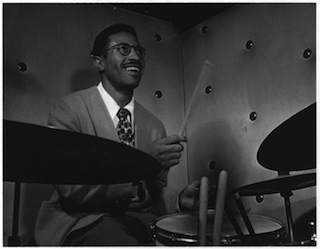
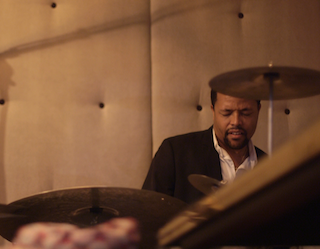
Max Roach at the Three Deuces, 1947 (Photo: William Gottlieb). Nasheet Waits at the new Three Deuces, 2015 (Photo: The Vinyl Factory).
The solo as giving someone a voice was emblematic of the change in self-determination in the music between the golden eras of the Savoy Ballroom and the Three Deuces and then after that. Be-bop was liberation for the artist, as if it was wilfully difficult.
Right and I feel like between big band swing music all those musicians came through those swing bands, Charlie Parker came through those bands in the mid-west. But then when he emerges, then he’s like “I have a different code. This displaying so where everyone knows where the beat is and can dance to it, well what if I really make it like this, what if I make these phrases move totally different? You won’t be so easily able to swing to this song, you’ll have to concentrate a bit more. And what if the rest of the band does that as well?” Louis Armstrong alludes to that in the ‘30s, he alludes to that kind of freedom but then there was a real shift twenty years later and that’s an important notion that they make.
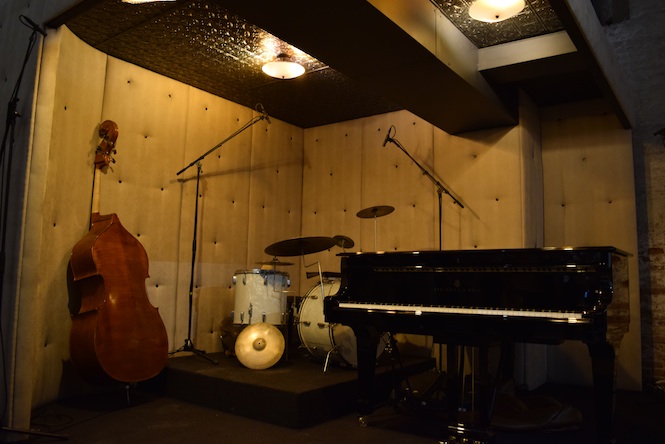
The Three Deuces (STAGED)- Photo: The Vinyl Factory
How did you actually go about actually recreating these stages?
I tried to source as many photos as I could from archive collections and then also try to start to talk to musicians. Nobody I knew went to the Savoy Ballroom. Many people I knew went to the Three Deuces, including the great jazz impresario George Wein. So I sent him a message saying “George, do you ever remember going to the Three Deuces?” and he said “yes” and talked about a band he saw there. And then I sent him a photograph and asked “what colour do you think that wall is?” because everything was black and white so it’s hard to determine what kind of space it could be.
So I tried to have those conversations too because it was important to hear what musicians would say about walking into spaces, so you know when you see a floor plan for the Savoy Ballroom, this grand space which actually had two stages and then a huge dancefloor and then all the places where people sat.
That was part of the process. Look at photographs, talk to people, look at photographs, talk to people. But then there was a moment when it was impossible to actually recreate the photograph. Like the fabric that’s on the Savoy Ballroom, that is not actually the fabric that they had.
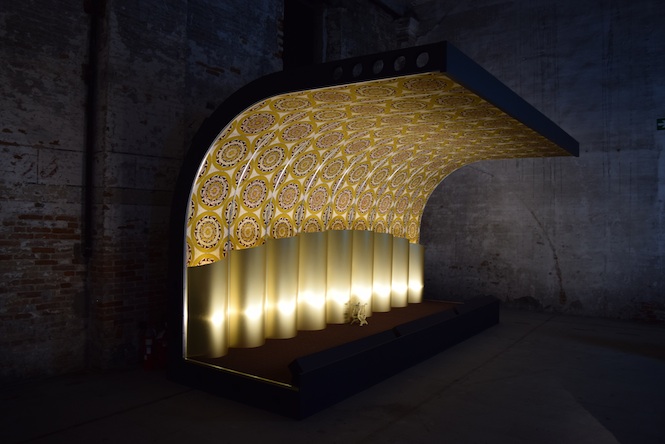
The Savoy Ballroom (STAGED) – Photo: The Vinyl Factory
And there’s a musical element to both installations too?
In this space there’s a player piano that Steinway just created, this is a brand new system called the Spirio system which allows their concert artists to come and record onto the piano and that it really replicates the sound. So it’s a different kind of ghost; I never really get to hear myself play on a piano. And it plays the song ‘He Cares’ and it’s in sync with the Savoy Ballroom with the man singing ‘He Cares’ as well as all the hammers and chains from the recording of the Angola prison workers. So there’s an ambient sound coming from the Savoy Ballroom stage but the answer comes from the music that happens on the Three Deuces. So they do have a conversation. It’s not only a conversation about where the music was but it’s also a conversation about the history that preceded those spaces that still ties them together.
Jason Moran’s STAGED is out now on The Vinyl Factory in collaboration with New York gallery Luhring Augustine. Click here to order a copy.
See STAGED at the Arsenale at the Venice Biennale now until November. Click here for more details.
22nd May 2015

Original Source /// The Vinyl Factory
A visual introduction to Jamaican sound system culture in Bristol.
Brought to Britain in the 1950s and 1960s during the first wave of mass immigration from the Caribbean, sound system culture played a crucial role in knitting together displaced communities in their adopted homes. Flourishing in London and across the country’s regional centres like Birmingham (or perhaps more unexpectedly Huddersfield), the Jamaican community in Bristol quickly developed a rich scene that revolved around systems like Enterprise Imperial Hi Fi and Froggy’s Excalibur. A local hero, Froggy is said to have given the Wild Bunch their break at St Pauls, laying the foundations for the band that would become Massive Attack.
Overshadowed perhaps by the incredible popularity of Massive Attack and the trip hop movement which followed, Bristol’s sound system culture is now being revisited as part of a touring exhibition exploring the UK’s Jamaican music history. Curated by Clarks in Jamaica author Al ‘Fingers’ Newman, alongside Mandeep Samra, who together with Newman and Paul Huxtable produced last year’s book on the history of Huddersfield’s sound systems, the Bristol show will shine a light on an area of UK history that “has meant so much to so many people, yet has been largely overlooked by mainstream historians.”
Charting the city’s sound system culture from the ’50s onwards through photographs, archive material and stacks of vinyl and an original dubplate featuring sound bites from interviews with the scene’s founding soundmen, the display will also feature a custom built Heritage HiFi, complete with deck, amps and speakers.
To mark the opening of the exhibition which will run at Bristol’s Colston Hall from 8th June to 17th July, The Vinyl Factory asked Al “Fingers” Newman to share a few images from the golden era of sound system culture in Bristol, from local legends to legendary stacks packing serious bass weight.
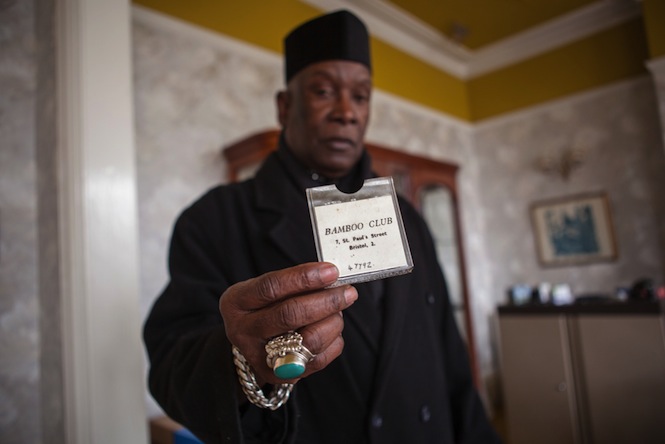
Photo © Al “Fingers” Newman
Foundation Bristol soundman, Karl “Sebastian” Smith, with his December 1966 membership card for the Bamboo club, one of the UK’s first clubs to serve the West Indian community. After arriving in the UK from Jamaica in 1962, Smith became selector for Tarzan the High Priest and Count Ajax before starting his own sound, Sir Bastian, in the early 1970s.
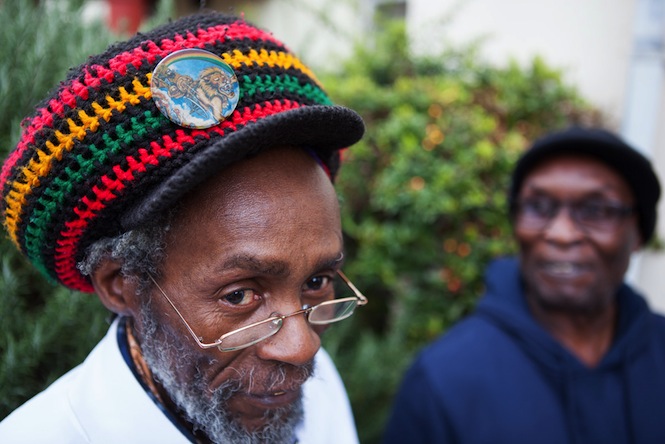
Photo © Al “Fingers” Newman
Roy Bailey AKA Big Roy [left] and his brother Ferdie Bailey AKA Rough Hand, Sir Jay sound system, Ashley Road, 2015.
Courtesy Donovan Jackson collection
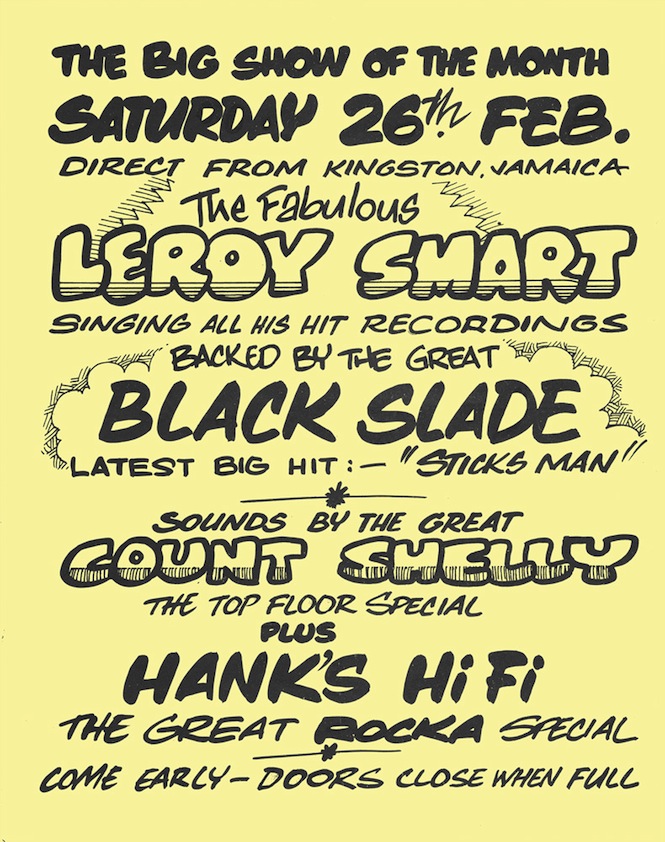
Flyer for a Leroy Smart concert at the Bamboo Club, 25 Feb 1977, with support from London-based sound system Count Shelly and Bamboo Club selector, DJ Hank AKA Hank’s HiFi.
Photos © Al “Fingers” Newman
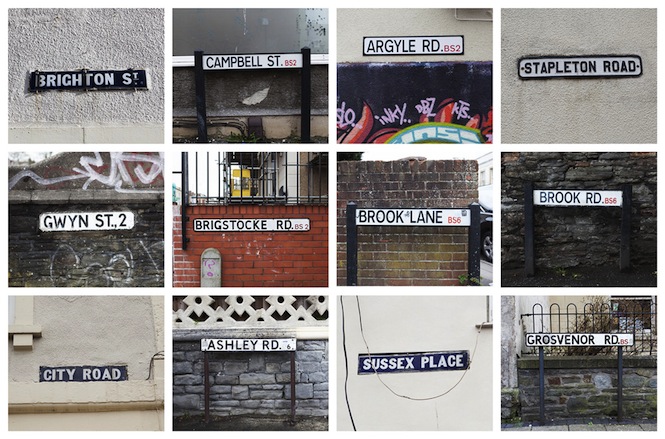
A few of the many roads and streets where Bristol’s blues dances took place.
Photographer unknown, courtesy Michael House collection
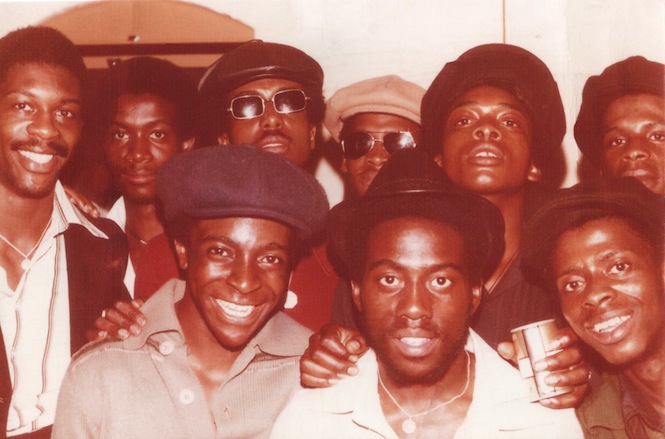
Enterprise Imperial HiFi and friends, circa 1977. Founded in 1975, Enterprise became one of Bristol’s most popular sound systems.

Photographer unknown, courtesy Froggy collection
Bristol soundman Froggy [left] and John Lawrence [right], playing Froggy’s sound system, Excalibur, out of the back of a van at Glastonbury festival, mid-1980s. A legend on the Bristol sound system scene, Froggy was the first to invite the Wild Bunch to St Pauls, helping them secure a spot on Campbell Street for St Pauls Festival.
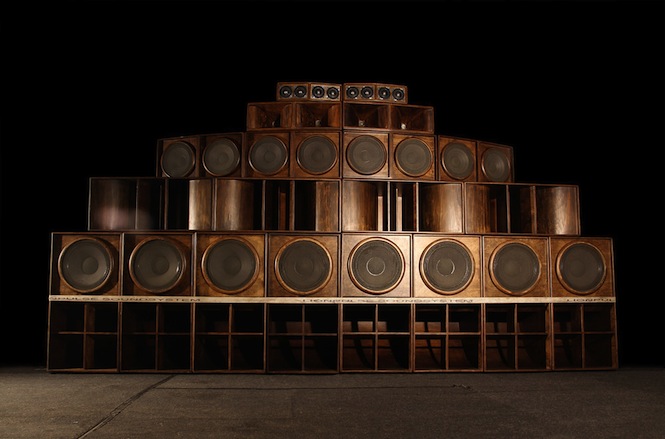
Photo © Gary Thomas
Lionpulse sound system, founded in 2013 by General H and Live&Direk – part of a new wave of Bristol sounds.
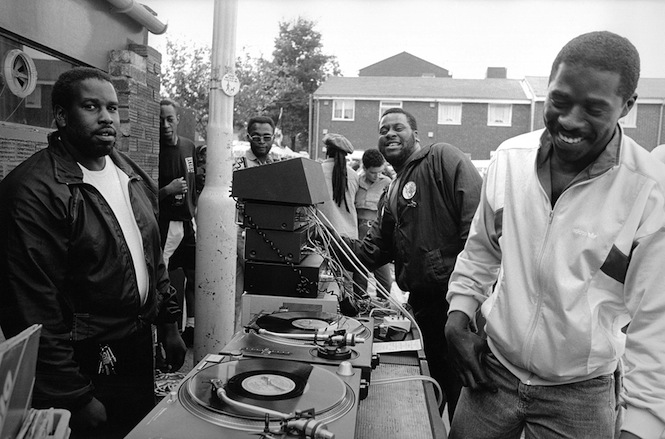
Photo © Mark Simmons Photography
Alpha & Omega sound system on St Nicholas Road by the Crystal Dove night club, St Pauls Carnival, July 1991.
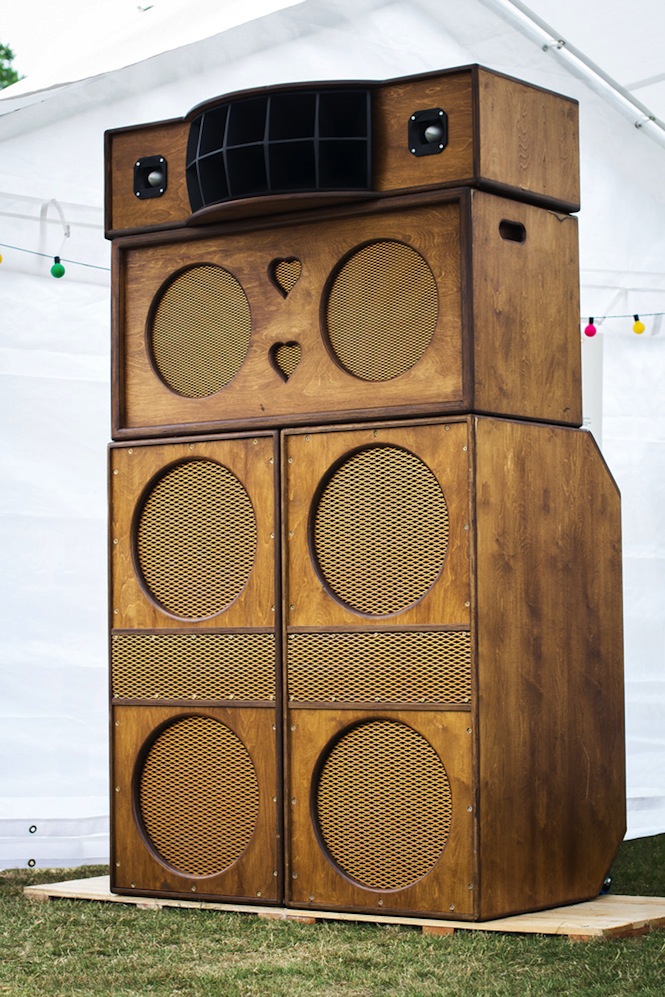
Photo © Elliot Baxter
Heritage HiFi sound system, built for the Sound System Culture project by Paul Axis (Huddersfield).
Sound System Culture Bristol runs from 8th June to 17th July at Bristol’s Colston Hall. Click here for more info.
The Sound System Culture: Bristol exhibition forms part of the Sound System Culture national tour developed by Let’s Go Yorkshire, celebrating reggae sound systems in key cities throughout the UK. Stay tuned for Birmingham (August) and London (February 2016).
22nd May 2015

Original Source /// The Vinyl Factory
From Lego DJ booths to handcrafted tree trunk plinths, The Vinyl Factory has scoured the world of Hi-Fi for beautiful record players.
Engineers and DIY-minded individuals have continually experimented with the turntables in pursuit of beauty, as well as perfect sound. The result of decades and decades of experimentation is an impressive stock of exquisitely designed and masterfully crafted record players. Whether it’s a dome-shaped turntable inspired by the first manned moon landing or an ultra minimalist ‘less is more’ design, we’ve rounded up 15 record players that are things of beauty.
A quick caveat before we proceed: as you might expect, some of the turntables that follow are difficult to obtain or are unobtainable altogether. If you’re hoping to purchase a deck, check out The Vinyl Factory's features on budget players, DJ decks, home listening, eccentric machines and vintage turntables. Or better yet, enter their photography competition for the chance to win a brand new Rega turntable.

Bang & Olufsen Beogram 4000 - designed by Jacob Jensen, this is the world’s first electronically controlled tangential turntable.
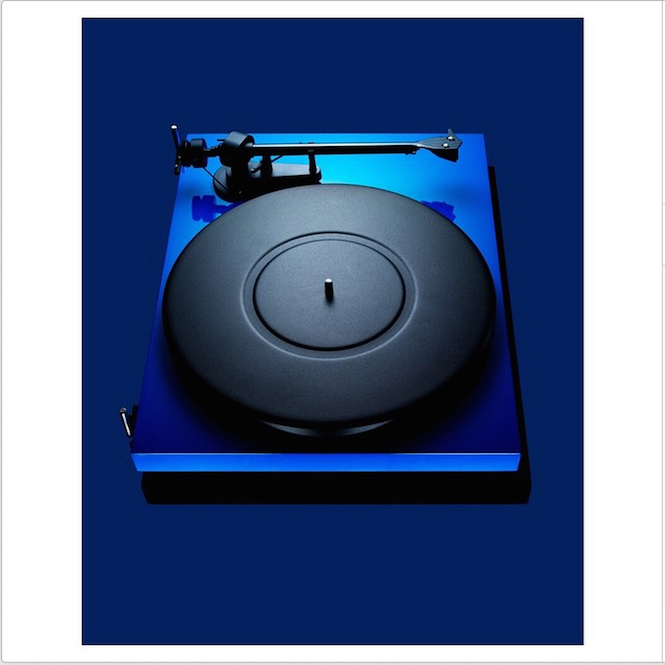
Pro-Ject Debut Carbon Turntable - features a carbon fibre tonearm.

The Shrine - a hub of drawers and doors accessible only with keys, designed by Sigurd Larsena.
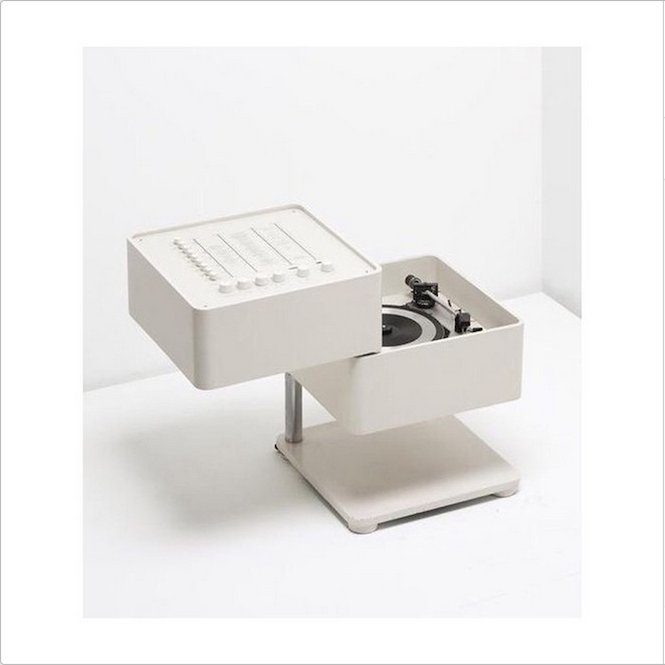
Wega 3300 Stereophonic System - designed by Verner Panton.
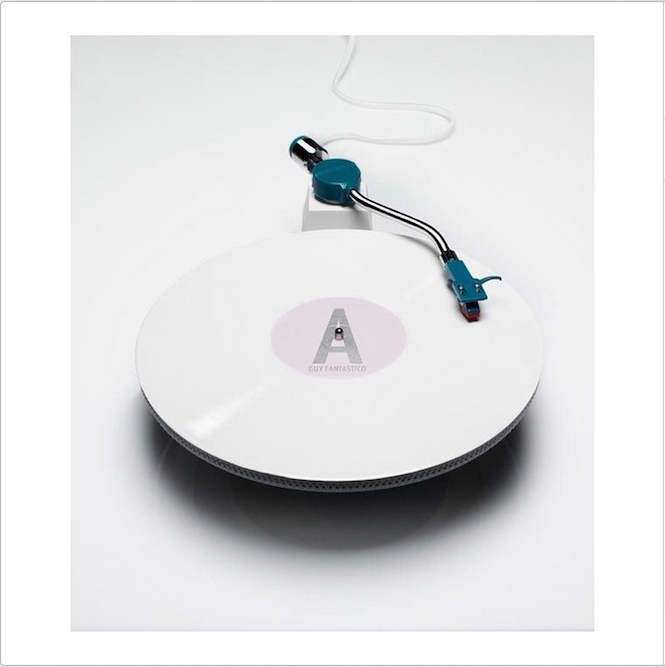
Reboot - a minimalist player designed by Siddharth Vanchinathan.
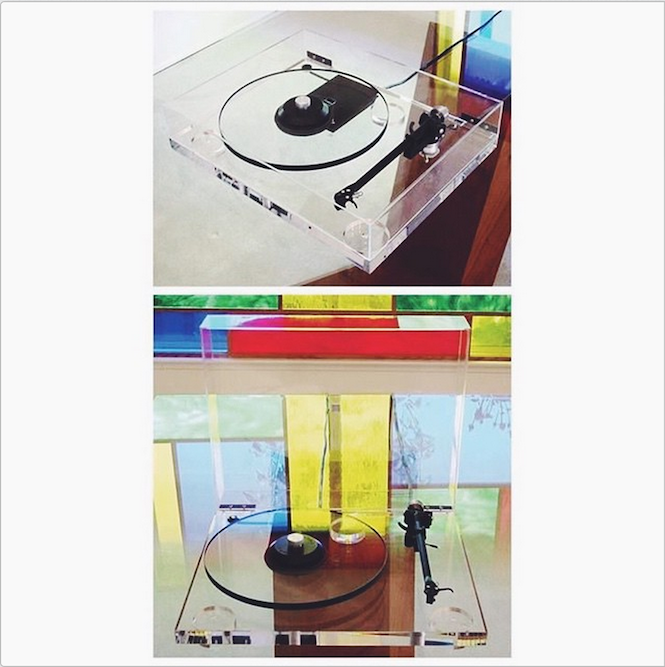
Custom Rega RP3 - features an acrylic plinth.

Pro-Ject RPM 9.2 X – an acrylic turntable designed by Divine Audio.
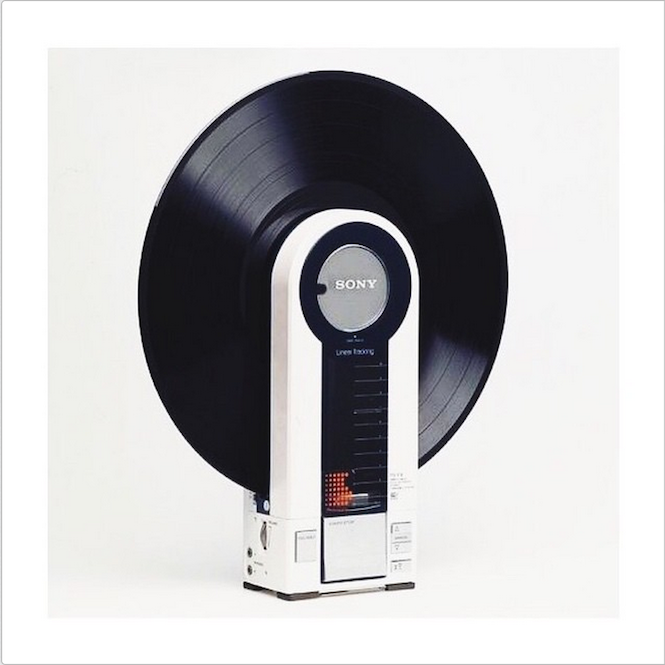
Sony Flamingo PS-F9 – the closest Sony got to producing a Walkman for records.
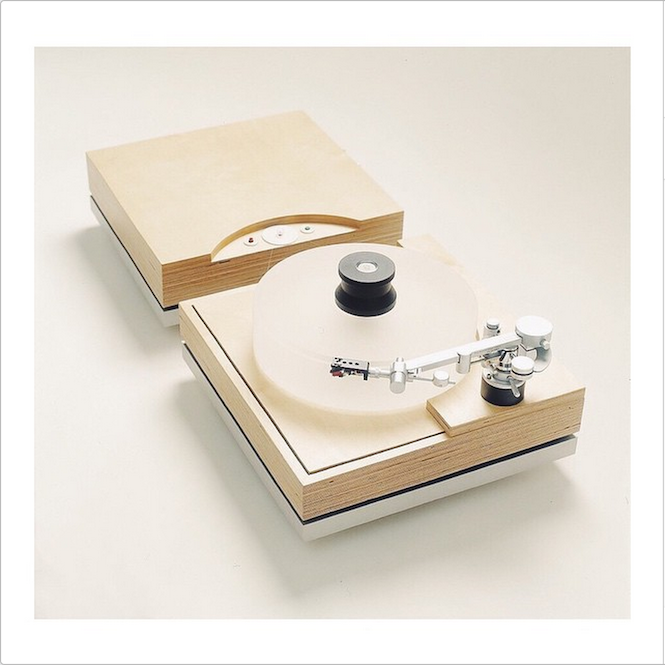
The Nordic Concept Reference Turntable – designed by A Better Life Audio Group.
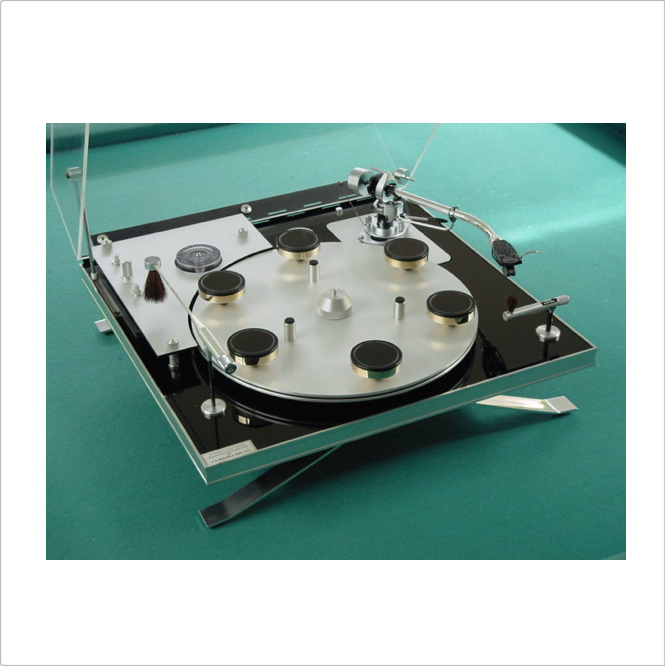
Michell Transcriptor - designed by John Michell, who also created the model Discovery spaceship seen in 2001: A Space Odyssey and built the eyes for Star Wars’ classic robot character, C3PO.
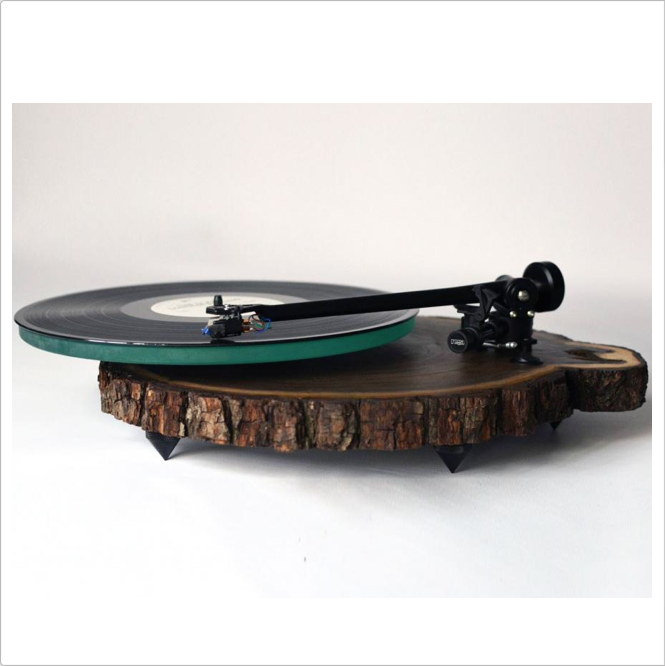
Silvan Audio Workshop – using natural hardwood and Rega components, a father and son hand-build these turntables.

Electrohome 861 Apollo - inspired by the first successful manned mission to the moon in 1969, Electrohome launched its Apollo series of record players in 1970.
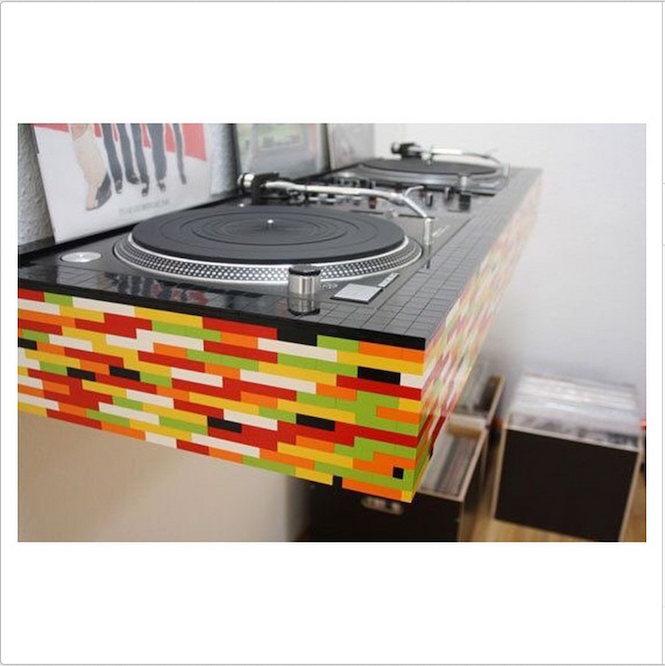
DIY Lego DJ booth – designed by Kai Mueller from Style Spy.
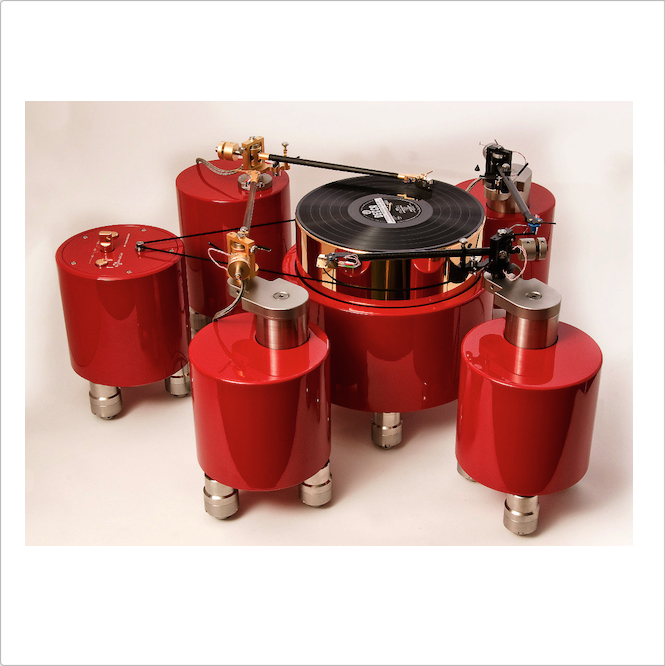
Davinici Audio Gabriel - weighs 165kg and features four, yes four, tone arms.
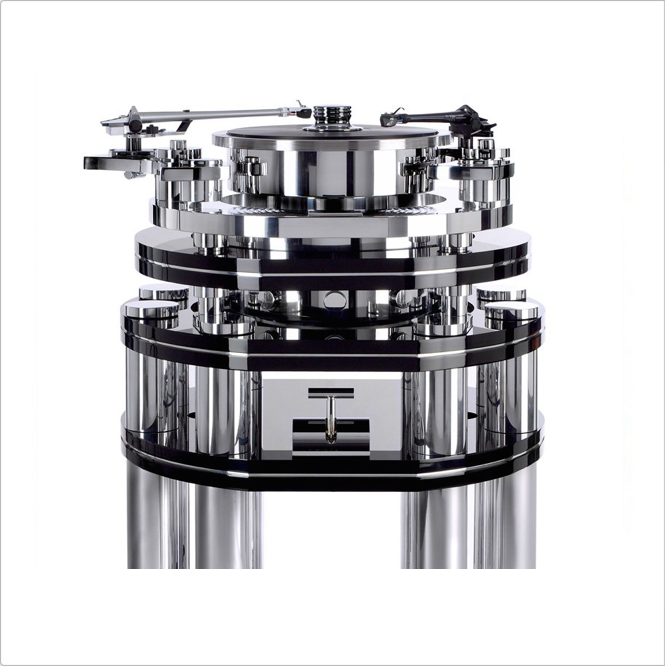
Transrotor Artus - weighing in at 220kg, this is currently the most expensive deck in the world.