







29th November 2016

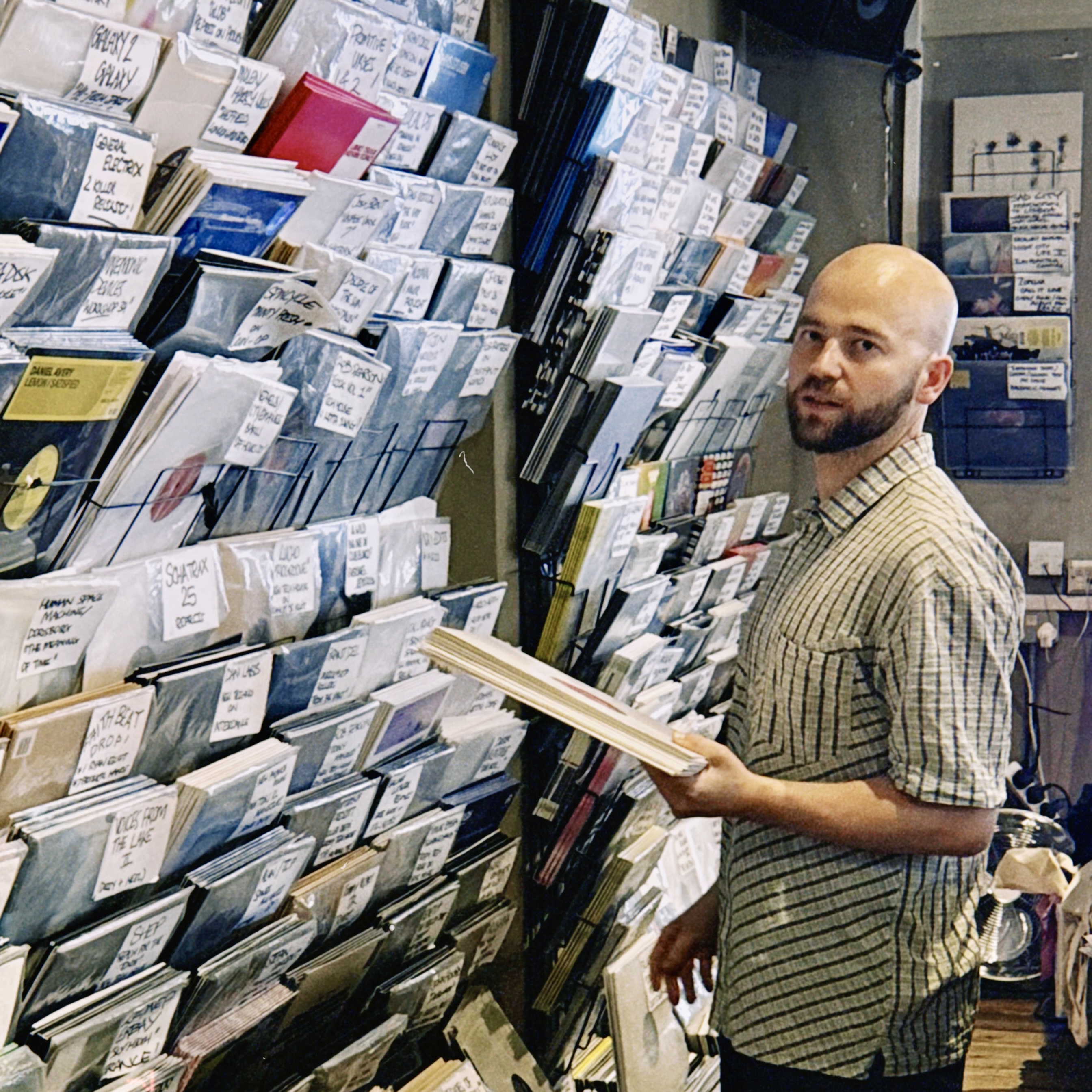
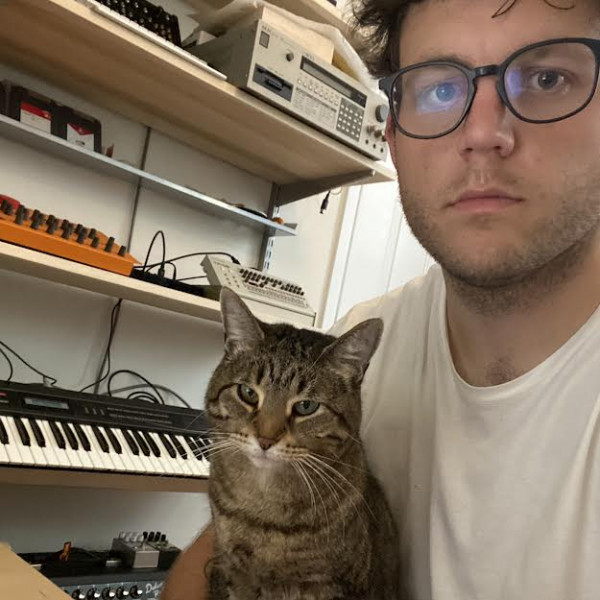
Our pick, On The Floor, a nod to the fact that the whole EP was produced literally on the floor (the studio was 'in transition') is a contemplative, mystical composition peppered with exotic ambient sounds that excellently set the tone for the rest of the EP.
As ever, our entire back catalogue of exclusive premieres is available to listen to on our soundcloud page.
24th November 2016

Happy days! This week we're celebrating the re-instatement of Fabric's licence with a very special mix from Jamie Jones. Jamie has been a regular at the shop pretty much since we opened back in 2003 and also a Fabric stalwart for over 10 years now, so it felt natural to join efforts for #saveourculture.
From his first release in 2006 to being voted #1 DJ by Resident Advisor in 2012, Jamie catapulted himself to stardom in a short period of time by shattering the invisible confines of genres, and breaking out of the minimal techno motif. From Glastonbury to DC-10, Jamie has always worked to expand the musical spectrum of his industry.
“I’m trying to illuminate this very niche, almost secret world of underground house and techno in a way that can be accepted by the mass public. Bringing two worlds together.”
Given the success of both his DJ Career and his cross-genre Live act Hot Natured, his goal may not be far off.
Check out the mix and read our interview with Jamie below.
DOWNLOAD / SUBSCRIBE TO THE PODCAST
Hi Jamie, it’s an absolute pleasure to have you with us today. How are you doing, and what have you been up to lately?
Hey.. Im fantastic thank you. I’ve just had two weekends off at home in my studio, I’ve just finished three new remixes which I’m about to run through some vintage compressors. So it’s been Geek City here (my favourite place)
You are playing at the Save our Culture Event on the 10th December, sure it will be a massive celebration now that Fabric has confirmed its reopening. What impact has Fabric had on you personally?
Craig (Richards) messaged me when he found out it was re opening, and we were reminiscing of the last time we played b2b till 9am in the spring…the positive energy and vibes were so thick in the air it was incredible. The thought of not experiencing that again was heartbreaking. I’ve been raving in Fabric since 1998, I was lucky enough to even be booked there before I had ever released a record in 2005 (Thanks Judy!), and have done countless hours of digging in deep on those decks. It’s truly one of those few places in the world that always keeps it real, and helps me do the same. I will always go there to play or dance whilst I’m able bodied.
After over a decade and on Ibiza, have you noticed a change in how dance music is consumed? Do you think people are embracing it differently now?
Yes for sure, but not only in Ibiza. On every level and in every genre everything is way more globally accessible and bigger. Ten years ago the most underground dj would play to 50 people in London, now they play to 500. The biggest dj (still underground) would play to 1,000 now they play to 4k+. Anyone who says that’s a bad thing, does not understand what house music is about, it’s about sharing the spirit as much as possible, anything else is being greedy and elitist.
I embrace it as I always believed that the music I love needed to be presented to as wider audience as possible. As for Ibiza, at the end of the day there used to be two parties playing only “underground” house and techno - Circo Loco and Cocoon. Now there’s what ten plus parties… As a clubber going on a holiday for a week, I would take that happily.
Also, the magic is still there, it just uses to be in your face and now you have to seek it out a little more, but still its easier to find than 90% of the world that is visited as much. I don’t care what anyone says, there is still nowhere like it to party 24/7, yeah maybe not in a club but there’s always a party to go to if you’re up for it. That combined with the beaches and nature and the diversity of people alone, is completely unique. There are other amazing places for sure, but Ibiza still has it.
Your seamless blend between big room house and techno and more underground, eclectic choices has become renowned. Do you think this has allowed a younger generation to be exposed to music that they wouldn’t normally?
I love the challenge of trying to generate a oneness and vibe for 10k people as much as I do for 200 people. Both are equally as challenging. A few years ago I played eight hours in a club in NYC the last two hours I was playing disco, and on the weirder melodic side for sure. When the lights came on at 9am, this girl jumped up at the front and said, “I drove two hours to come tonight, two months ago I had never heard of you and some friends took me to your stage at tomorrowworlds. I loved it and came when the doors openened tonight” (she was there 11pm-9am) That’s what drives me, so I guess the answer is yes.
We're always interested in what music DJs are being inspired by at the moment. What are you currently listening to off the dance floor?
I’m loving:
Lee Fields - new album on repeat
Lucre - Can't stop me now - lyrics are amazing!
Yuusef Kamaal new album - especially the track lowrider!
Metronomy - My house - from new album which is great!
22nd November 2016

Little Beat Different Issues is a new series focused on reissuing music from Eastern Europe previously unavailable on the Western market, brought to light by London-based collective Little Beat Different.
The label’s first release is a compilation of recordings made by Czech project ORM. Originally formed as a disco group in the late 70s, ORM became pioneers of funk and electronic dance music in former Czechoslovakia. This compilation cherry-picks tracks from 4 different albums released between 1979 and 1984.
Check LBD's exclusive interview with ORM below, a rather interesting conversation where they explain the difficulties of releasing music during the Communist period and how they manage to smuggle the tapes to America.
And while you are reading, Little Beat Different have also prepared a special rare groove and library music mixtape with some of the tracks from the release.
Enjoy!
How did ORM came into being?
‘Me and Petr met at high school and began to play in one of those amateur bands. We loved B.B. King and James Brown so we covered them often, that was our musical beginning. This was around 1970, two years after our Soviet friends besieged Czechoslovakia, and the country was crippled by normalisation. That meant a total end to live performance of this sort of music here. Clubs were closed, regular checks were imposed as well as the so-called “set list check” through which higher authorities judged whether certain tunes could be performed. That was a catastrophe for music deemed to be too "Western", and for us that meant we simply couldn’t live off it anymore. So we ended up forming a band with our friend Kos?a Ruchadze, and went on to tour clubs in the West, Austria, Switzerland, and Germany.’
‘There used to be an agency that would facilitate touring. Surprisingly, the Communists were quite open to that for one simple reason: musicians would bring cash back to Czechoslovakia. Well, they’d get only vouchers, which were then called bons, but still it was an immense advantage to be able to travel out of the country. Firstly, it was quite uplifting to keep in touch with Western culture, but also because it was possible to obtain new instruments and bring them back home. Don’t forget that back then it was hard to even get some proper guitar strings over here.’
‘After some time travelling with other renowned bands and artists such as the actor and singer Josef Laufer, Petr and I decided it was time to go “freelance”, which basically meant jobless. At the beginning it was a bit wild, but since we were always very frugal with money, we managed to save up quite a bit. In a few years’ time, we could finally afford to buy our first recording studio, albeit very small and basic.’
And that’s how ORM was created.
‘Yes, that was the time when ORM was born. We bought a four-track Tascam tape recorder. We would record four tracks, and then mix three into a separate one, and then continue like this. So that’s how the first records were created, and even the records that were later released on the LP’s. We also did plenty of music for film, and documentaries. It was quite a primitive set up, but it worked. Stevie Wonder recorded his most successful album in the seventies on a four-track. Technically it might not have been the best available, but he was still able to make a global hit record, so we said, well... why couldn’t we try the four-track as well!’
‘Leonardo da Vinci described it very well: music ceases to exist the very same moment it is created... and I’d always hated that. My brother was a painter, he’d paint a picture and immediately had an object he could show people. But what about music? You didn’t have many options back then, you could either try and get a record deal yourself, or you bought whatever ever you could find... and afford! (not sure if I've understood this bit right but I think this is the point?). So when we bought our first tape recorder, and I connected my old guitar – man how we were carried away by it! All of a sudden you’re listening to a record we’d created! it was the first time we'd been able to hear our own musical expression on record.’
Neither of you is actually called ORM. What is the story behind the name?
‘We took the name from a book we'd read as young men, called The Ginger Orm. It was written by the Swedish author Frans G. Bengtsson, and talks about a Viking warrior called the Ginger Orm. Well, the book was originally called The Red Orm but when it was released again after the revolution, they renamed it The Ginger Orm so that it wouldn’t spark any controversy. The book told the story of Orm the Viking who would set on a journey every spring and loot every place he’d come across. Even though the stories weren’t particularly happy, it was really well written, and we thought it was amusing.
‘Many years after we learned that orm stands for snake in some Scandinavian languages. So we came up with Organization for the Recording of Music as an official name. But that was more so that we could explain it to people, because when we tried talking about the book, Orm the Viking, no one really knew what to think.’

And so commenced your careers as producers, resulting in music collaborations with the era’s most eminent artists such as Karel Gott, and composing films scores and music for television series. Not many people were aware, however, that you also produced your own work – and independently released four albums. One could argue it is those four LPs in particular that carry the highest artistic value, featuring infectious melodies and timeless musical ideas. Tell me more about them.
‘Tropic, the album featuring the most interesting things, was purely our work. To ensure we sold at least a few copies, we did a song with the Kamélie duo. At that time, the wider public were unaware of this kind of music. As well as collaborations in the West, we also looked to the lands of the far East, working on a project in India called The Youth Of India. Back in the day, film documentaries were rarely made, instead big screen projections with pre-set dia-projectors and music tailored to them were hugely popular. So Tropic eventually featured themes we had elaborated on through our collaborations in other countries, such as Japan and India.’
‘Additionally, there were ideas we had been working on around that time period that we worked into final album versions. This was around the time that electronic music was about to break out, and we were completely fascinated by it. When the first MIDI Instruments and digital recording technology became available this opened up a whole world of new possibilities. We already had a Moog keyboard which is one of the seminal electronic instruments. Later on we added our first sampler Emulator II+, an E-mu SP12 drum machine. Sampling is an incredible tool that people almost take for granted nowadays, but back then it was cutting edge stuff! the Bands that embraced the new technology available to them really began to evolve their sound in ways that had never been heard before.’
Did you ever get a chance to perform those songs live? Have you ever had touring ambitions at all?
‘When we released our album Talisman, they were sung by Petr who is a superb singer. Even today when we do demos I ask Petr to sing and quite honestly it would be ideal if it could stay that way because he always nails it. But Petr never dreamt about touring or being famous, he's more of an introvert than an entertainer. We had a great time touring for a few years with Laufer but we never felt the need to showcase ourselves that much. If you want to be a singer or performer, there needs to be a bit of exhibitionism in you, when there’s not, it doesn't work.’
‘We sold around 22 000 copies of our album Talisman. Back then, people like Karel Gott would sell hundreds of thousands of records, but for us 22 000 was quite a success as no one really knew who we were! we were just happy people actually liked the songs. we managed to get some radio play too, but we didn’t really make any money from it. Today, 20 thousand copies would be a success! The two albums we did with the Kamélie duo were in English so it was distributed around the Eastern Bloc, and we ended up selling around 750 thousand copies.’
I heard about your endeavours to get those releases abroad.
‘We tried, and even made it! It was very difficult during the Communist period so we had to do it secretly through a guy that would smuggle the tapes to America. It was at a time when we were part of quite an interesting collaboration with the Muzak Company, an American satellite TV company that produced elevator music for all kinds of commercial settings such, hotels, banks, things of that nature. They wanted us to record covers of Sting, Tina Turner, Barbra Streisand and so on – things that were legal in the States, but ridiculously expensive. Our tapes were sent over there through a third party whose name we never discovered. He didn't want to reveal it, and we didn't want to know. Such were the times, it just wasn’t officially possible.’
‘What I consider as the gravest crime of Communism was the herding of society into a locked enclosure, without the possibility to communicate with the outer world. Ironically, it wasn’t so difficult to travel abroad, to the West. Sure, it was tricky and a rather tedious procedure, you had to have contacts but unless you were politically engaged in dissent, everything was fine.‘
And then came the revolution, and things changed completely, almost overnight. How did you come to embrace your old work in the context of the new era? How do you perceive albums like Tropic and Talisman after all these years?
‘Well I may disappoint you but we don’t indulge in philosophy. We just make music, we do it for a living. To make a living doing this in a small country means you really have to make compromises. If you insist on doing things exactly as you please, you may as well starve to death!’
You have one of the richest production careers here in the Czech Republic, you have a beautiful studio, collaborations with the biggest pop stars. Is there anything you would still like to achieve?
‘At this age, I only need to feel joy when working on music. That is to say, I’m looking forward to doing something with Karel Gott again, I’m wondering if we could do a musical but I’m not sure if that will work since the music scene is pretty saturated here. It would be great if a young talented producer appeared, someone whom we could collaborate with and guide, in terms of both of production and artistic direction. And last but not least, it would be amazing if we could record with a symphonic orchestra again. So if any of those opportunities arise, that will make me truly content.’
Pavel Ruzicka and Petr Dvorak continue to produce music as ORM to this day, although rather than nostalgically reminiscing about good old times, they regard their erstwhile independent pieces as the finest result of their perpetual efforts to outsmart local authorities, including successful attempts to smuggle Western instruments to the country while secretly exporting their own work out of it. Their studio, somewhat tucked in a family mansion on the outskirts of Prague, boasts original synths and keyboards from bygone times, platinum disc plaques, a rich vinyl collection, photographs with the country’s most eminent musicians, with R?ži?ka still firmly behind his mixing desk. On a regular basis, their creative hideout becomes a temporary recording home to major Czech pop artists as well as the country’s fledgling electronic music cohort, coming full-circle to their impressive decades-long adventure.
in conversation with Alexandra Strelcova / www.lbdissues.com
22nd November 2016

But why was such a short space of time one of the most influential periods for the development of modern dance music?


Having pioneered the practice of all-night freeform dancing to a selection of recorded music, Mancuso’s influence on the development of dance music culture was subtle but seismic. Some of the dancers he hosted during his loft parties were Larry Levan, Frankie Knuckles, David Morales and Kenny Dope, a group of young DJs who would go on to write the blueprint for dance music as we know it. But Mancuso maintained that the DJ was the least important factor in creating an environment in which people can express and enjoy themselves. Hope for the future lay in the exponential growth of musical output we have seen since. The challenge is to once again find a meaningful way of processing it collectively.
Tim Lawrence's ‘Life and Death on the New York Dance Floor, 1980-83’ is available to buy here. We also have copies ‘Love Saves the Day: A History of Dance Music Culture, 1970-79’ in stock.

22nd November 2016

16th November 2016

The Phonica podcast is back for its November edition! Simon and Michal taking the reins this month, selecting the best wax that have landed recently on our shelves.
From the proto electronic sounds of Sun Palace to Photek's epic 'Into the 90s', to the long-awaited repress of Aquarian Foundation on the mighty Going Good, THAT new 'store only' Traumprinz, Damon Bell's superb 'Altered Visions' - finally here after two years in the making! - or the deeper passages of Hodge's Body Drive and Daniel Avery's Space Echo - exclusively produced for his recent DJ Kicks contribution the guys have covered all the corners of the new releases.
Full tracklist down below, click the titles to be redirected to each release page. 'Til next month!
DOWNLOAD SUBSCRIBE TO THE PODCAST
TRACKLIST:
Sun Palace - Rude Movements [BBE]
Anthony Naples - Lekker [TRILOGY TAPES]
Photek - Into the 90s [METALHEADZ]
Damon Bell - Altered Visions ep [MEDA FURY]
DJ DOGG - Flamen Galah (Dj Fett Burger Remix) - [BUTTER SESSIONS]
Garth Be - Falling Leafe [RUFF KUTZ]
Aquarian Foundation - Mystery Track [Going Good]
Lord of The Isles - Weh-n [ESP INSTITUTE]
Daniel Avery - Space Echo [!K7]
Black Deer (Willie Burns) - Nowhere Man [NO 'LABEL']
Theo Parrish, Waajeed, Duminie DePorres - Warrior Code [SOUND SIGNATURE]
Traumprinz - NY Diva Has Been Set on Fire [TRAUMPRINZ] **Store only title**
Delano Smith - Without Reason part 1[SUSHITECH]
Hodge - Body Drive [NO CORNER]
Hysteric - Amoureuse [VIOLETTE SZABO]